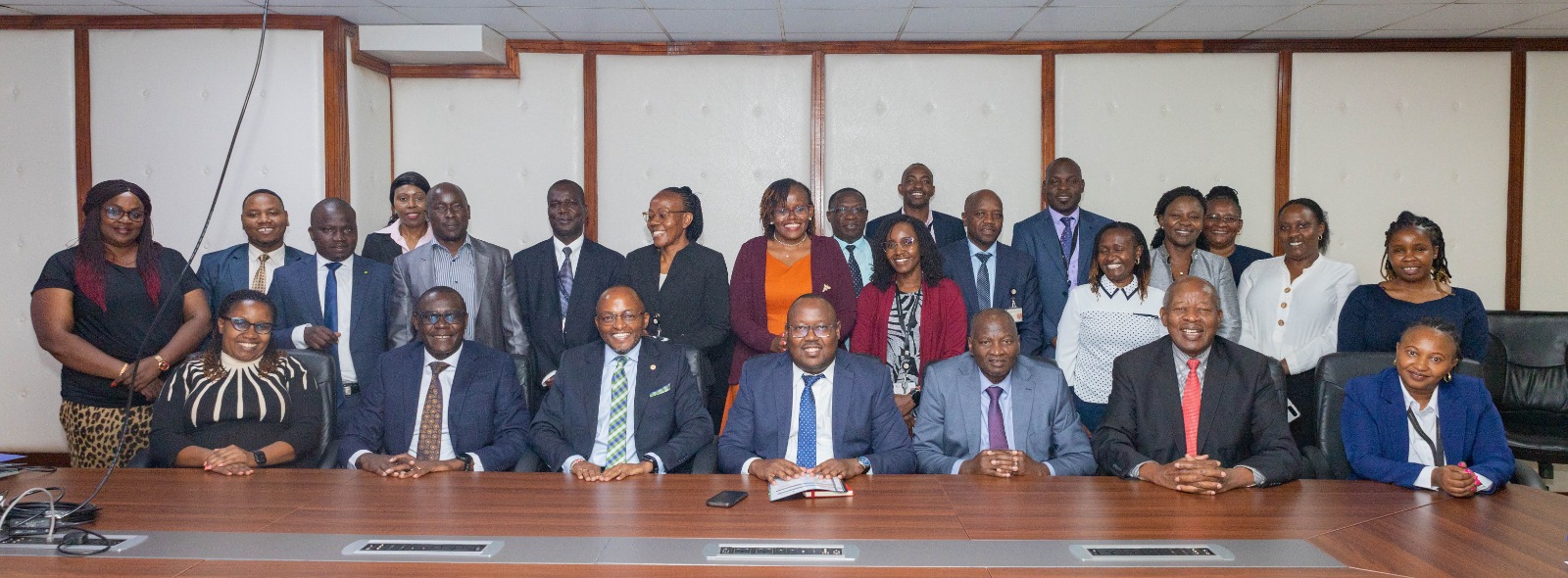
On 11 February 2026, ICPAK held a roundtable meeting with the Kenya Revenue Authority (KRA) to discuss current challenges and opportunities in tax policy and administration. Chaired by Commissioner George Obell and FCPA Robert Waruiru, the meeting deliberated on tax base expansion strategies, the phased filing of 2025 tax returns, the Ushuru Mashinani project, and the opportunities within the eTIMS platform.
CPA Obell emphasized the need to broaden the tax base, noting the declining tax-to-GDP ratio resulting from overreliance on a narrow base. He stated that this could be addressed by modernizing compliance systems to increase revenue collection without raising tax rates. He further indicated that the Authority is integrating artificial intelligence (AI) and machine learning across all tax heads to seal revenue gaps. As part of the proposed tax reforms, KRA and the National Treasury are considering eliminating the KSh 5 million VAT threshold to enhance equity, streamlining tax exemptions, introducing a dual-assessment regime in which both the Commissioner and the taxpayer initiate tax assessments, and establishing an eTIMS Transaction Hub to integrate processes such as supply chain traceability, geo-referencing, and auditing.
ICPAK emphasized the need for KRA to align the implementation of eTIMS with other tax laws, particularly income tax provisions on exemptions. The Institute also highlighted the need to review and increase the VAT threshold, undertake training initiatives, and develop sector-based solutions, among other recommendations.
ICPAK commended the Authority for implementing proposals from the previous meeting, including issuing notices before placing taxpayers on the special table and initiating discussions with the National Treasury regarding tax agents.
The meeting was attended by representatives from various KRA departments including the Commissioner Large and Medium Taxpayers, members of the ICPAK Public Finance and Taxation Committee, and the ICPAK Secretariat